More students take Easter Revision courses than ever before. A key factor was the abolition of January A-level exams, but the ever-upwards pressure on good university places continues to put a premium of getting A grades rather than anything lower.
Figures show a 4 per cent increase in Ucas applications for undergraduate entry to UK universities in 2014. The total number of applicants has recovered well since the drop two years ago due largely to the increase in tuition fees at that time to £9,000 per annum.
Throughout this period, A-level revision courses have grown in demand, especially at Easter time when schools and colleges offer intensive specialist weekly sessions.
The reasons for the continuing growth and popularity of structured Easter revision are two-fold. Firstly, there are students who are not particularly proactive in their learning and study habits and these courses are the best way of making them complete some organised revision two months before it’s too late. Secondly, they also suit good students aiming for top university courses who are opting for what they see as a relatively cheap insurance policy against failure. This later group is not prepared to leave anything to chance, wanting to make doubly sure that they achieve their university offer grades.
However, a new factor has come into play this year. Chris Kraft, principal of Duff Miller College, is convinced that demand for revision courses will increase in 2014 for a specific reason. He explains: “The removal of the annual examination session for the first time this January will have a massive impact on both Lower and Upper Sixth pupils. For the past decade, schools had become strategic about entering students early for A and even A2 modules in the January session. If they performed well, they could concentrate on fewer paper for the June. If they didn’t do as well as planned, they had the chance of a second attempt in the summer. Now they only have one shot at A2 modules and a maximum of two attempts at AS papers.”
Joel Roderick, academic registrar of Oxford Tutorial College, agrees. He has noticed another group turning to Easter revision courses owing to the demise of the winter exam session: “In the past, post-A-level students would have done resits in January and then gone off on their gap months. They are now having their gap over autumn and winter before returning in March for Easter revision courses prior to resits in June.”
Kraft also notes that students’ strategies for revision are changing. “In the past, students would cherry-pick individual modules for Easter courses, since they had already achieved high enough scores in the other modules. Now they are enrolling almost exclusively for the whole AS or A2 subject, sometimes both.”
Lower Sixth students have another relatively recent complication when they apply to university, according to Mike Kirby, principal of Ashbourne Independent Sixth Form College He says: “Many of the Russell Group universities are asking applicants to detail their exact AS modular score rather than simply giving A and F grades, etc. Students must maximise their actual marks in the Lower Sixth and they only have one chance to do this now in the summer session. This is helping to drive demand for exam-based, intensive revision courses.”
Whatever the reasons for the increasing popularity of these courses, intensive work in a small group, focusing on exams and led by an enthusiastic and experienced teacher can fill important gaps, develop exam awareness and give plenty of practice and feedback on what examiners want. Above all, it gets the revision process firmly under way and establishes a real feeling of momentum and confidence for students.
Weekly courses generally cost in the region of £500-600 per A-level subject and £400 for GCSE (around £200 more if residential). Booking tends to take place earlier these days, so the best advice if you want a reputable structured course is: don’t leave your enquiries until the end of term. Find out more about Easter revision with CIFE
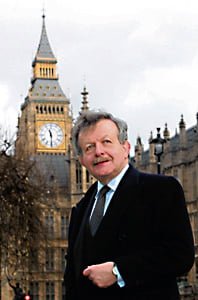 Lord Lexden spent the first eight years of his working life as an academic historian at Queen’s University Belfast, lecturing, researching and writing on political history. For the following 20 years he worked in the central organisation of the Conservative Party, first as political adviser to Airey Neave, spokesman on Northern Ireland, and later as Deputy Director of the Conservative Research Department.
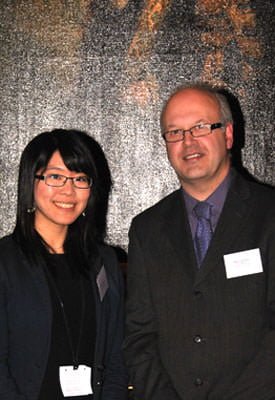 The Gold Award winner, Onusa Charuwana from Thailand, was an A-level student at Cambridge Centre for Sixth-form Studies for two years. She achieved four A*s, dropping only 21 marks out of a maximum possible score of 2000. She is now studying Architecture at Lucy Cavendish College, Cambridge. She said: “I must thank all the staff at my college, because throughout my two years there they gave me so much of their time and attention. I felt that I was catered for as an individual, both by my teachers and by the pastoral staff. By the middle of my AS year they had given me the confidence to believe that I should apply to Cambridge University, so this award and my success is a great credit to them as well.”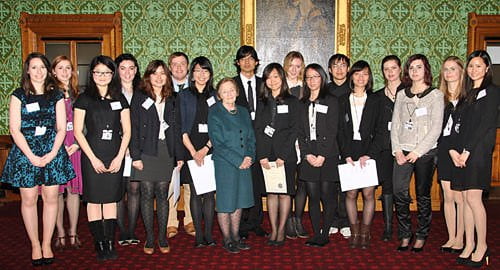
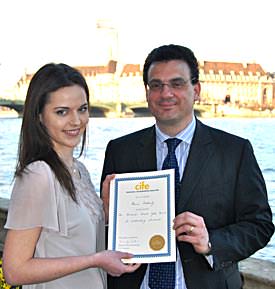 The Gold Award winner, Xenia Dethlefs, studied for eighteen months at Cambridge Centre for Sixth-form Studies. She achieved four A*s and one A grade in five A level subjects. She is a talented mathematician, who is fluent in three languages, including German and Japanese. She said: “For me everything comes down to opportunities and how you embrace them. I am extremely grateful to my parents who have always invested in my education, to my teachers who have always given me every support and to institutions such as CIFE that reward students’ hard work.”