the sixth-form experts

Call us now for advice
0208 767 8666

CIFE General News Articles

  • Almost half of CIFE students entered a Times Top 30 University in 2019

    The latest survey of CIFE students’ university applications shows that, in 2019:

    • Over 1700 students from 25 CIFE colleges entered a UK university
    • King’s College, London, remained the University with the most places gained, for the second year running, closely followed by Manchester;
    • 46% entered a Times Top 30 University;
    • 41% entered a Russell Group University;
    • 12 students entered Oxford or Cambridge universities;
    • Almost a quarter of all students entered a London university
    • 24% are studying Finance/Business/Management (22% in 2017) – the most popular course choice for the fifth year running

    Our congratulations to those students and to the teachers who helped them succeed!

    The table below shows the universities accepting the most CIFE students in 2019. Russell group universities are shown in green.


    2019 University No of CIFE students
    1 King’s College, London 79
    2 Manchester 69
    3 City, London 65
    4 Leeds 56
    5 Exeter 54
    6 University College, London 52
    7 Bristol 51
    8 Westminster 50
    9 Queen Mary, London 46
    10 Newcastle 42
    11 Coventry 40
    12 Nottingham 40
    13= University of the Arts, London 38
    13= Kent 38
    15 Surrey 34
    16 Oxford Brookes 32
    17 Reading 31
    18= Royal Holloway 28
    18= Sussex 28
    20 Essex 26
    21= Birmingham 25
    21= Sheffield 25
    21= Durham 25
    24= Cardiff 24
    24= Goldsmiths 24
    26 Edinburgh 22
    27 East Anglia 21
    28= Brunel 20
    28= York 20
    28= Liverpool 20
    31 Southampton 19
    32 Bath 18
    33= Nottingham Trent 17
    33= Warwick 17
    33= Aston 17
    33= Lancaster 17
    37 Loughborough 16
    38 Imperial 15


    50% of cife college students get into a top 30 university

  • Exam preparation hints and tips reminder

    Examinations create stress for most students (and parents) and nobody at a college or school wishes to see students struggle to overcome exam stress.

    There are ways to help candidates alleviate their worries:

    • Exercise – regular physical activity will keep your spirits up; increase brain power and help you sleep. If you have a particularly stressful day, doing some intense exercise for half an hour will really help to relieve the pressure and make things seem more positive. Recommended: running, swimming, yoga or martial arts.
    • Don’t let your diet slip while revising – it’s easy not to think about what you are eating and to consume much more or less than you would usually,  particularly of the fast food variety, but it is essential that you have a healthy balanced diet, with lots of fruit, vegetables, healthy oils and water, to ensure maximum brain power and to prevent depressive moods.
    • Don’t waste time searching Facebook.
      • The human brain is most productive between 9am and 1pm so make sure that you set this time aside for serious revision, but be realistic about the rest of your day, and give yourself plenty of time off.
      • It is better to revise efficiently for those 4 hours, than to revise inefficiently all day.
    • Eat a good breakfast before you get started – high protein so that you don’t crash afterwards (e.g. scrambled eggs!)
    • Keep a big glass of water with you.
    • Tidy the area you intend to study in.
    • Shut out all noise and distractions – don’t be tempted to have loud music on.
    • Create a timetable and stick to it.
    • Make a list of revision topics and tick these off as you go.
    • After each session write a small list of bullet points in summary of what you have learnt.
    • Have a coffee or tea break, or a fresh air break after each hour.
    • If you can, study near a window for natural light and have it slightly ajar for fresh air.
    • Less is more! Don’t try and cram too much in.
    • Pretend you are a teacher and you are teaching a class that has never heard of what you have been revising and explain what you have been doing clearly and concisely.
    • Use friends to help revise.  Sometimes hearing each other’s answers to questions can offer you a really good way of thinking about the questions and the answers you’re giving.
    • Get a good night sleep – a well-rested mind will focus more easily and retain more information.
    • Take breaks to allow the revision to sink in, although be wary of procrastinating!
    • Listen to your body; if you are tired, then get an early night, if something isn’t sinking in then switch topics and try again with the original topic later.
    • Make your own notes from the notes that you made in your lessons – this way you can think about what you’ve learnt and it can help to make sure that you have really understood what you have learnt.
    • There is a difference between knowledge and understanding, and the key to effective revision is organising the mountains of information into core ideas.
      •  It is less about copying out a syllabus or regurgitating lesson notes, and more about developing an overview from material and summarising what really matters.
    • But be a proactive learner – as you venture through the detail, make a list of questions as they arise, and ensure you find the answers.
    • Make a note of any specific concerns or weaknesses which you need to address and speak with your Tutor, your peers, consult alternative texts, etc.
    • Finally – do not be overwhelmed. There is nothing worse than setting out a three to four-hour study session and spending two hours or so panicking about where to begin, and the other hour or so stressing about how much time you have wasted already!
    • Just get on with it: step by step, chapter by chapter, topic by topic, you will then make your way through what you need to study.


    NB for EXAMS:

    Please plan your answers and always write the plan on your answer sheet – this helps the examiner understand your knowledge.

    REMEMBER, GOOD REVISION & PREPARATION BRING GOOD RESULTS


    This article was written by Stephen Clarke, Principal of Cherwell College Oxford


    See our full range of Sixth-form advice articles about study skills.

  • Top students receive 2019 CIFE Awards from Lord Lexden, OBE

    Article in summary

    The article describes the 2019 CIFE awards ceremony at the House of Lords, at which CIFE President, Lord Lexden OBE presented prizes to 41 high achievers from CIFE colleges.

    Article in detail

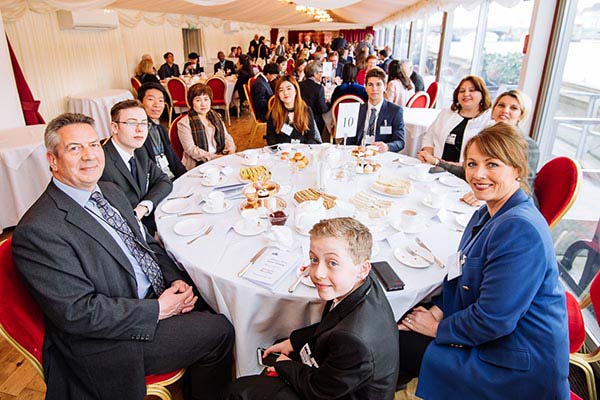
    At the annual CIFE Academic Awards Ceremony held at the House of Lords on Wednesday, 3rd April, Lord Lexden presented awards for academic excellence to forty-one students who achieved remarkable A-level and GCSE results last summer. The recipients – some British, some from overseas – were warmly applauded at the presentation, all having studied at sixth-form colleges belonging to the Council for Independent Education (CIFE), of which Alistair Lexden is President.

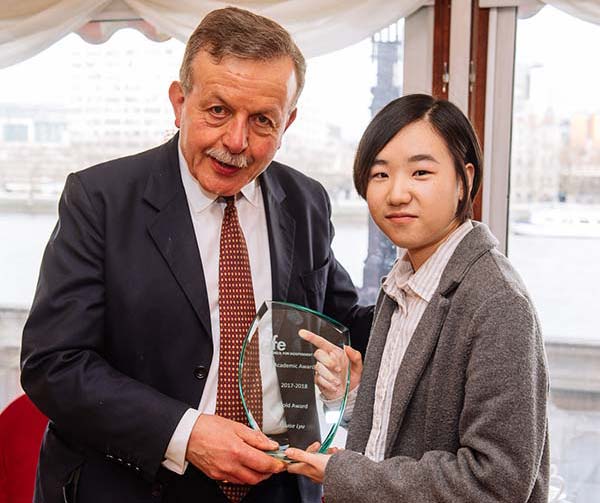
    The top prize, the CIFE Gold Award, was won by Louise Lyu from China, a student at MPW College, Birmingham, who had obtained A* grades in Mathematics, Further Mathematics, Chemistry and Physics. Louise’s performance in Physics was one of the highest in the country and she is now reading Physics at Imperial College, London.

    The 2019 CIFE awards ceremony was supported by Double First and by Wesleyan Financial Services, both sponsors of the work CIFE colleges do.


    Lord Lexden presents the 2019 CIFE Gold Award to Louise Lyu


    CIFE Academic Awards

    The individual winners are listed below.

    CIFE Gold Award
    Louise Lyu (MPW Birmingham)

    CIFE award for Sciences
    Chenming Wang (Cambridge Tutors College)

    CIFE Andrew Osmond Maths awards
    Fanfei Chen (Chris) (Bosworth College)
    Ha Anh Nguye (Cambridge Tutors College)
    Phan Thi Ngoc Thu (Chloe) (Bosworth College)

    CIFE award for Economics
    Gianvincenzo Matricardi (Christopher) (Cambridge Centre for Sixth-form Studies)

    CIFE awards for Humanities
    Christina Childs (Ashbourne College)
    Constanza Michell (Ashbourne College)
    Lily-Rose Morris-Zumin (Ashbourne College)
    Mathilda Mould (Ashbourne College)

    CIFE awards for Visual and Creative Arts
    Sophie Brown (Oxford Sixth Form College)
    Suksakaow Mahuttanatan (May) (MPW London)

    CIFE award for Languages
    Niku Hessabi (MPW London)

    CIFE award for Social Sciences
    Thi Hien Trang Dang (Gloria) (Cambridge Centre for Sixth-form Studies)

    CIFE Value Added awards
    Meg Aston (MPW Birmingham)
    Mollie Selwood (Bath Academy)
    Pranay Ruparelia (MPW Birmingham)

    CIFE award for GCSE
    Katherine Chulack (MPW London)

    Paul Kitchener Memorial Award
    Apinya Thitiphatthanawanit (CATS Cambridge)

    Baroness Perry Award
    Motunrayo Saidat Bashir (Tuns) (Bosworth College)


    CIFE College Awards

    Acorn House College Katia Grewal
    Ashbourne College Meena Bashier
    Bath Academy Alise Ashby
    Bosworth Independent College Chang Liu (Chloe)
    Brooke House Hai Vu Quach (Jonny)
    Cambridge Centre for Sixth-Form Studies James Klima
    Cambridge Tutors College Roisin Spragg
    Carfax College Michael Gimson
    CATS College Cambridge Geonwoo Baeg
    CATS College London Na Yeon Kim
    Chelsea Independent College Bogdan Berlov
    Cherwell College Abigail James
    Collingham College Rosamond Sutton
    David Game College Eshaya Lim
    LSI Independent College Afton McKeith-Magaziner
    MPW Birmingham Joe Lamb
    MPW London Rebecca Bushell
    Oxford International College Shazril Bin Suhail
    Oxford Sixth Form College Sophie Brown
    Regent Independent College Ramya Logeswaran
    Westminster Tutors Henna Jolapara


    Gallery


    cife college teaching is results focussed

  • CIFE Colleges report on Clearing 2018 experiences

    News summary

    Principals from 5 CIFE colleges report their impressions of how flexible universities have been in making and confirming offers during UCAS Clearing 2018

    In detail

    CIFE colleges, which specialise in courses preparing students for university entrance, including a wide range of one-year resit A-level courses, comment as follows about the impact of UCAS Clearing in 2018.

    These comments are based on the results of hundreds of interviews conducted in the past two weeks with students attempting to gain university places through Clearing.

    Although Clearing was a profitable place for many students this year, it did not seem to be for those who narrowly missed their grades at the top end, since there was no leniency from their chosen university, indicating that the top courses – History, Law, Medicine etc. – continue to apply the same rules they always have.  This was not evident in media reports which understandably focussed on the unprecedented strength of the general buyers’ market for students. James Barton, Director of Recruitment, MPW College, London

    We have attracted resit enquiries from students with very strong A-level grades, e.g. BBB.  These candidates have been offered courses at very highly-ranked institutions but not necessarily for the course nor institution for which they held a firm offer, typically requiring A*AA.  Rather than accept second best, these high-calibre candidates have the self-belief to invest in a retake year, even though the Clearing offer was notionally very good.  Their view is that these top universities are opening their doors wide almost too readily and devaluing the quality of the place. Fiona Pocock, Principal, Bosworth College, Northampton

    We have noticed a distinct ‘fragmentation’ within Russell Group universities this year: some ‘sticking to their guns’ and not moving to take students with one or two grades below offer, whilst others have done so.  This fragmentation relates closely to degree subject. Mark Love, Principal, Oxford Tutorial College

    Universities seemed to be dragging their feet in rejecting students this year before releasing them into Clearing. Craig Wilson, Principal, CATS College, Cambridge

    Our experience this year accords with the general media coverage: more unconditional offers and, despite receiving high initial offers, students being accepted with much lower grades for the same courses. Chris Drew, Principal, Cambridge Tutors College, Croydon

  • Half CIFE students get top 30 university place in 2017

    The latest survey of CIFE students’ university applications shows that, in 2017 :

    • 1392 students from 19 CIFE colleges entered a UK university
    • University College London knocked Manchester off the top spot for most places gained
    • 49% entered a Times Top 30 University
    • 43% entered a Russell Group University
    • 12 students entered Oxford or Cambridge universities
    • Finance/Business/Management (F/B/M) is the most popular course choice area (22% of the total)
    • 4 course areas account for just over 50% of all students (F/B/M, Humanities, Creative and performing Arts, and Engineering)

    Our congratulations to those students and to the teachers who helped them succeed!

    The table below shows the universities accepting the most CIFE students in 2017. Russell group universities are shown in green.

    University name No of CIFE students
    University College London 69
    City University London 66
    King’s College London 62
    Queen Mary London 50
    Manchester 42
    Newcastle 38
    Oxford Brookes 35
    Leeds 32
    Nottingham 32
    Bristol 29
    Westminster 28
    Coventry 27
    Birmingham 27
    Exeter 26
    Warwick 25
    Aston 24
    Royal Holloway London 24
    Leicester 23
    Reading 23
    University of the Arts London 23
    Cardiff 22
    Kent 22
    Kingston 21
    Lancaster 21
    East Anglia (UEA) 20
    Sussex 20
    Brighton 19
    Southampton 19
    Durham 18
    Birkbeck London 17
    Bath 17
    Sheffield 17
    Goldsmiths College London 16
    Imperial College London 16
    Nottingham Trent 16
    Edinburgh 16
    Essex 16
    Brunel 15
    Liverpool 14
    Ravensbourne 13
    Loughborough 13
    York 13
     

    cife colleges are inspected regularly