the sixth-form experts

Call us now for advice
0208 767 8666

CIFE General News Articles

  • CIFE top students receive awards from Lord Lexden

    Article in summary

    The article describes the 2017 CIFE awards ceremony at the House of Lords, at which CIFE President, Lord Lexden presented prizes to outstanding students from CIFE colleges.

    Article in detail

    Eighteen students who gained outstanding A-level results last summer were be presented with awards for academic excellence at the House of Lords on Wednesday 5th April.  One exceptional  Foundation Course student and one outstanding GCSE student also received awards. Another 18 students received CIFE college awards in recognition of their contribution to the life of the colleges they belonged to.

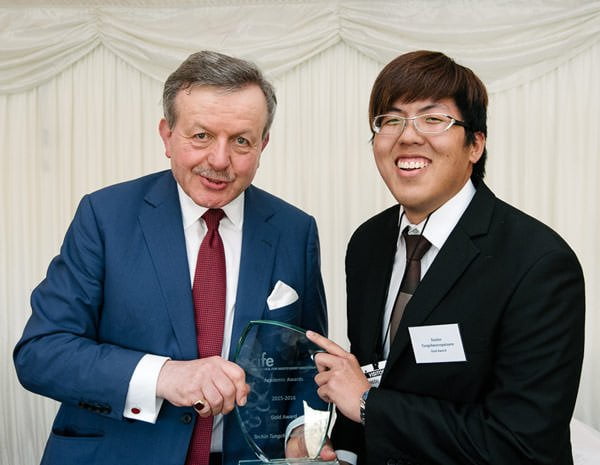
    The top prize, the CIFE Gold Award, was won by Techin Tungcharernpaisarn from Thailand, who studied at Cambridge Centre for Sixth-form Studies.  Techin is now reading Materials Science at Oxford University, having obtained A* grades at A-level in Mathematics, Further Mathematics, Physics and Chemistry.  He dropped only 26 out of a total of 2400 available marks, inevitably gaining full marks in many of his papers.  He gained gold awards in the Chemistry Olympiad in both years of his sixth form, and a gold award in the Cambridge Chemistry challenge; a gold certificate in the UK Senior Maths Challenge and a merit in the Kangaroo round.  Throughout his time at CCSS Techin impressed all his teachers and his peers with his intelligence, his diligence and his positive attitude.  His university professor reports that he is already making his mark as a scholar of the highest calibre.

    Lord Lexden, a former General Secretary of the Independent Schools Council (ISC), hosted the annual Academic Awards Presentation on behalf of the Council For Independent Education (CIFE) of which he is Honorary President.

    Lord Lexden said: “Year after year statistics produced by leading international organizations show that our independent schools and colleges provide an education that ranks among the best in the world.  No wonder families here and abroad are so keen to send their children to CIFE’s successful member colleges.  Their outstanding A-level results prove once again that they have fulfilled the trust placed in them.

    Their mingling of great talents and different cultures helps enrich our country and other nations. That is why CIFE champions easier visa arrangements for able young people who come to study here and deplores the inclusion of these most welcome guests in the official migration figures.

    The CIFE awards ceremony was supported by Double First and by Wesleyan Financial Services, both sponsors of the work CIFE colleges do.


    Lord Lexden presents the CIFE Gold Award

    Lord Lexden presents the CIFE Gold Award to Techin Tungcharernpaisarn

    CIFE Academic Awards

    The individual winners are listed below.

    CIFE Gold Award
    This is the top award, and was won by Techin Tungcharernpaisarn (Cambridge Centre for Sixth-form Studies)

    CIFE awards for Sciences
    Arin Wongprommoon (Cambridge Centre for Sixth-form Studies)
    Ho Sze Nip (Joy) (Bosworth Independent College)

    CIFE Andrew Osmond Maths awards
    Jake Lee (MPW Birmingham)
    Trung Kien Nguyen (Bosworth Independent College)
     Xiaoyu Weng  (Ashbourne Sixth Form College)
    Xinye Sha ( Bob) (Cambridge Centre for Sixth-form Studies)

    CIFE award for Economics
    Xiaorui (Iris) Zhan (MPW London)

    CIFE awards for Humanities
    Amy Wells (MPW London)
    Lily Rabson (MPW London)
    Ming Yan Lee (MPW London)
     Yiran Chen (Vivyne) (MPW Birmingham)

    CIFE awards for Visual and Creative Arts
    Simina Popescu (Lansdowne College)
    Soala Ajienka (Ashbourne Sixth Form College)

    CIFE award for Languages
    Sophie Geikie-Cobb (MPW London)

    CIFE award for Social Sciences
    Nicole Gray (Bosworth Independent College)

    CIFE Value Added award
    Josephine Rushe (MPW Birmingham)

    CIFE award for GCSE
    Evgenia Alexandrova (MPW London)

    Paul Kitchener Memorial Award
    Paloma Morales (MPW London)

    Baroness Perry Award
    Alexandra Young (Collingham)

    CIFE College Awards

    Ashbourne College Tracy Nwokoma

    Bales College Ammar Monojir

    Bath Academy Sophie Teasdale

    Bosworth Independent College Olivia Powell

    Cambridge Centre for Sixth-Form Studies Edoardo Buttinelli

    Cambridge Tutors College Jian Yi Kok

    Carfax College Violetta Skittides

    CATS College London Marwa Ali Almadhi

    Chelsea Independent College Gurkiran Kalsi

    Cherwell College Haiqi Wu

    Collingham College Davit Endeladze

    DLD College Karabo Sankoloba

    Lansdowne College Shiyoun Kim

    MPW Birmingham Faye Sing Yi Kho

    MPW London Tara Bage

    Oxford International College Julio Revilla

    Oxford Tutorial College Alice Taylor

    Regent College Alinah Yar


    cife college courses provide choice and flexibility

  • Surge in demand for GCSE revision courses

    Article summary

    CIFE colleges running Easter Revision courses are reporting an increase in demand for GCSE revision courses in 2018.  This is being attributed to the recent reforms of the GCSE examinations, designed to contain tougher topics than previously.  The new exams combine new content, new assessment and a new grading system.

    Article in detail

    James Barton, Director of Easter revision at MPW College, London, explains the reasons: “Parents are a lot more clued up on the reforms now and their questions are much more targeted.  GCSE demand is buoyant because there is continuing nervousness about the new exam specifications.  Secondly, as schools get ever stricter on admissions into their sixth forms, parents are using GCSE revision courses in large numbers to try and ensure their child’s place for A-levels at their chosen school.  No one wants to be the wrong side of the line on results day.  In addition, universities used to look at AS level grades as a marker of achievement.  It is now evident that they rely more on GCSE grades when assessing applicants’ capabilities.  Students and parents are aware of this, so there is more emphasis on ensuring top GCSE results.”

    This trend is confirmed by Dan Roberts, Director of Marketing at Cherwell College, Oxford.  He adds, “In monitoring our course enquiries, I have noticed a greater interest for our GCSE revision courses.  This includes our Google Ads responses where the majority of search terms are for GCSE revision.”

    Sixth formers are also taking up Easter courses in increasing numbers. The new linear A levels, which are based on final exams, have boosted  interest in revision courses for these syllabuses, according to feedback from the college providers.  Parents and students are much better informed about the two-year reformed exams which were held for the first time last summer.  However, early booking trends in the CIFE colleges indicate that demand for AS-level revision continues to decline.  Barton says, “There is now a great deal of uncertainty around the value of the new AS exams.  Since its decoupling from the A Level people are asking, why is an AS level revision course necessary?” So courses are being offered as part of a two-year A-level revision plan as much as for the now devalued AS level exam itself.” Here’s more information about the new A, AS and GCSE exams

    He also makes the general point that the stigma about taking a revision course has vanished.  “There is nothing negative about taking a Easter Revision course nowadays.  It is regarded as extremely useful not only as a forensic revision tool, focusing on the specifics of the new reformed syllabuses, but also as a timely confidence boost.”

    Find out more about Easter Revision courses run by CIFE colleges.


    50% of cife college students get into a top 30 university

  • No January A level and other changes

    Article in summary

    On November 9th 2012 OFQUAL announced that, after the January 2013 AS/A2 exam session, AS and A2 exams will only be available in the summer. This article describes the background to this announcement, the implications for students and teachers of no January A level and other changes, and reviews changes to A levels which are still under consideration.

    July 2014 to 2019: We’ve not changed the article itself, but we’ve added updates in red. For a full and up-to-date description of what’s happening read our article The new A-level and GCSE exams‘.

    Article in full

    Background:

    Education minister Michael Gove feels that A levels are not tough enough and that they do not prepare students properly for university. In early summer of 2012 he asked Ofqual, the body which oversees qualifications, to carry out a review of proposals which included:

    • Abolishing January exams and allowing students to resit exams only once
    • Ensuring involvement of universities in the design of A levels
    • Considering whether AS levels should continue, and in what form

    This November (2012) Ofqual published the results of that review, Impact Assessment of A-level reforms. The only concrete result at present is the decision to restrict AS and A2 exams to the summer, but in the accompanying announcement. Ofqual warn that further changes are likely.

    Problems for students

    As we argued in an earlier article, the ability to resit during the year benefits many students and does not in itself lead to ‘grade inflation’. There are other fairer ways to improve the information available to universities than simply to cut January examinations. The only change in this direction is the introduction of the A* grade at A level (and 9 at GCSE) to distinguish the very best students from the very good ones.

    January exams are currently used for a number of purposes which will become less appropriate or convenient when those exams are no longer available.

    A-level retakers

    Students who need to improve A level grades will no longer be able to get their resits finished by the end of January. That was a popular option – less costly in terms of time and money, with nine months ‘free’ to work /travel etc before university. It is possible but much less attractive to take time out over the winter, restart work in early spring and resit in June.

    One-year A-level students

    Students compress an A level into one year for a variety of reasons: subject change after lower sixth, combining resits with a new subject, topping up an overseas qualification etc. A common pattern for one-year courses was to get through the AS by January, take the exams and then use the final six months to focus on A2. In the summer students took A2 and any AS units which needed improving. Now they may only take all exam units in the summer, a significant extra challenge in what is already a very tough course. The AS / A2 distinction has disappeared with the abolition of ‘modular’ exams. AS has survived as a stand-alone qualification, but no longer contributes anything to a student’s A level result.

    Lower sixth try-out

    It is not uncommon for schools to put lower-sixth students in for an AS paper in the January of their lower sixth, primarily to gain exam experience but also to generate a sense of urgency. This will no longer be possible – it was always a somewhat questionable practice in terms of broader educational objectives

    Upper-sixth AS resits

    This is the main focus of criticism of the January exam sessions. A considerable proportion of second year sixth-formers use the January session to resit AS exams, and not only to improve a poor result: more able students often resit to bump up a good AS paper grade to an excellent one. Such students must now wait until the summer, and retake AS units alongside A2. Whether or not to do so will be a tough decision: will work on AS resits pull down performance on A2 exams a fortnight later?

    Possible benefits for students and teachers

    To weigh against the clear loss of opportunity for students to spread their exam taking over three or even four sessions, and the loss of resit opportunities during and after a two-year A-level course, there will be compensations.

    Fewer exam sessions

    All exam sessions are stressful but January exams disrupt learning too. During the run-up to exams students focus on revision and, if their teachers do too, that blows a hole in the middle of the academic year. If the academic year is, say 30 weeks long (and from year start to summer AS exams it is usually shorter than that), 3 weeks in January is a serious loss. If only some of a class are taking January exams, teachers face the difficult choice: revise in class or crack on with new work? Exam-taking students often then get hit with a pile of catching up to do. For schools, shoe-horning January exams into a busy teaching timetable is often a major administrative headache that they will be glad to see the end of.

    More focus in lower sixth

    Anecdotally, students work less hard in lower sixth if they know they can retake AS exams in January of the second year. That may be true for some, but improved grades in January AS resits usually owe more to a student’s greater academic maturity that to a sudden decision to work hard.

    What about other exams?

    GCSE

    Changes to GCSE were announced at the end of 2011. Ofqual provides a summary of the details and of transition arrangements. June 2013 will be the last opportunity for students to sit module-based GCSE syllabuses. From then on all GCSE exams will be linear – based around internal assessment and exams taken in the summer.

    GCSE modules will be available for the last time in January 2013. After that, students wanting to resit any GCSE subject except English and Maths can do so only by taking the whole exam again the next summer. In English and Maths only there will be a GCSE resit exam in November.

    International A levels

    The abolition of January exams applies specifically to centres in England. Cambridge International A levels won’t be affected. They can still be taken in November and June. Edexcel, the other main provider of A levels to overseas centres, has not announced whether they will still provide any January A-level exams.

    What other changes are being considered?

    There are still quite a few changes in the pipeline, but no firm dates for decisions. Things have moved on a long way since this article was written. See The new A-level and GCSE exams for details of changes over the past 5 years.

    More Changes to resit rules

    While the abolition of January exams may have gone a long way towards meeting criticism that resitting is too easy, there are still several other tough options being considered. One is to allow students to resit a module once only, a second is to require students to resit all modules of an exam, not just the one they did least well in. A final option is to remove the current ‘best mark counts’ rule so that a student has to take the result of the last retake of a module, even if it is worse than the result he or she got in a previous sitting.

    All of this will make life yet harder for the student who needs to retake.

    Update: the new A levels (first exam 2017) are linear – all papers are sat at once so no possibility just to resit individual papers. 

    Involvement of universities

    The original idea of requiring up to 20 top universities to endorse any A-level syllabus before it could be used has been attacked by the universities themselves, who point out that they do not have the resources to do this properly. However, some greater university involvement is likely, if only because Mr Gove has made such a point of it.

    Update: universities have provided some input to the new exams after all

    Changes to AS level

    Ofqual have acknowledged that there is strong support for AS, as an exam at the end of lower sixth on the way to A level, and as a stand-alone qualification. Whether AS should still count for 50% of a full A level is still under discussion – some argue that it should count for less because it is easier than A2 .

    Update: AS will continue but marks gained will not count at all towards A-level grade. It’s now worth 40% of an A level for UCAS rather than 50%. The number of students sitting the new AS exams is falling steadily…

    Changes to A-level syllabuses

    There is a general move to reform syllabuses yet again, to increase synoptic assessment, allowing students “to integrate and apply their skills, knowledge and understanding with breadth and depth”. It is likely that there will be an increase in the amount of external assessment in syllabuses where over 40% of marks currently come from internally assessed work.

    Update: reform is now complete, with reductions in coursework, changes to exam structures etc. For a full summary see our page on the new A level and GCSE exams

    Timescale for change

    The government is pressing for new syllabuses to be in place ready for teaching in 2014. The exam boards aren’t happy with this because some basic parameters such as the role of AS levels are still to be decided, and getting an effective new syllabus into schools takes a lot of consultation and trialling . Schools also have much recent experience of change introduced with too many rough edges still on show.

    Update: The very last modular exams, in ‘minority languages’ were sat in June 2019. All other A level subject exams have been linear since 2018.

     

    cife colleges give you honest and accurate feedback

  • CIFE College Challenge 2017

    CIFE College Challenge Quiz 2017

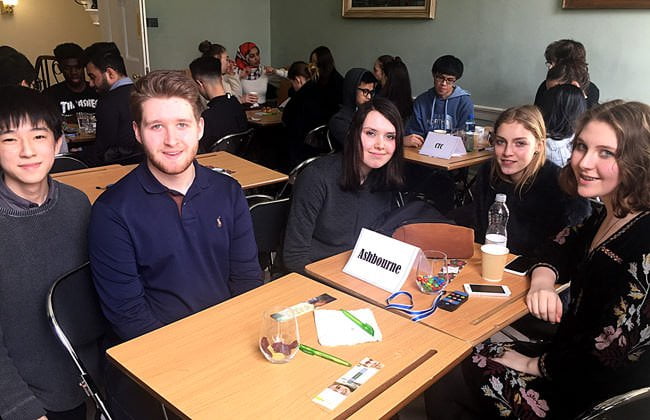
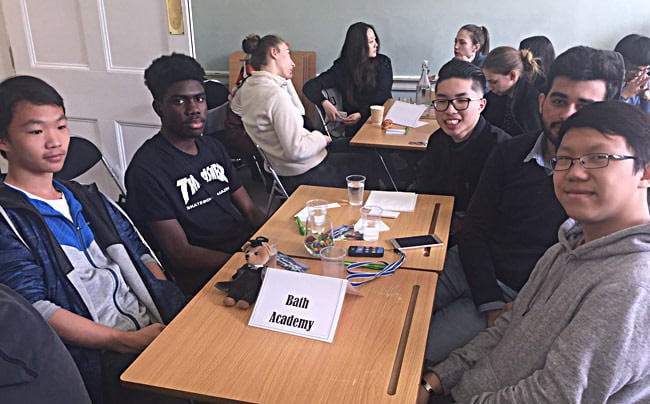
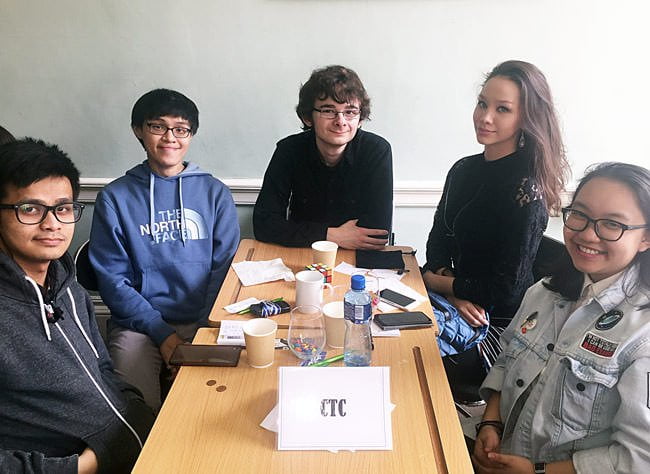
    It’s February – must be time for the CIFE Challenge – the inter-college quiz with a difference. The event took place at New College of the Humanities in Bedford Square, London, with questions testing the teams across a wide range of subjects. As the pictures below show, competition was lively and everyone had a good time. The winners were the team from Ashbourne, hotly pursued by runners up from CATS and Lansdowne.


    50% of cife college students get into a top 30 university

  • Half CIFE students get into a top 30 university

    CIFE colleges are proud of the grades their students get and of the quality of help they are given with university applications. Each year we survey our member colleges to gather information about the university places their students won, and we’re pleased to announce that in 2016:

    • 1365 students from 19 CIFE colleges entered university
    • Manchester takes 1st spot for the first time since the survey began in 2012-2013
    • 23% entered a Times Top 10 University
    • 39% – a Top 20
    • 50% – a Top 30
    • 45% entered a Russell Group University
    • 22 students entered Oxford or Cambridge universities
    • Finance/Business/Management (F/B/M) is the most popular course choice area (20%)
    • 3 course areas account for 50% of all students (F/B/M, Humanities and Engineering)

    Our congratulations to those students and to the teachers who helped them succeed!

    Our Advice page links to more cife articles. If you have any questions or advice that you’d like us to feature on these pages then please let us know.


    The table below shows the universities accepting the most CIFE students in 2016. Russell group universities are shown in green.

    University name No of CIFE students
       
    Manchester 61
    University College London 57
    City London 55
    King’s College London 54
    Queen Mary London 51
    Bristol 48
    Exeter 36
    Coventry 34
    Westminster 34
    Oxford Brookes 31
    Newcastle 30
    Royal Holloway 30
    Leeds 26
    Nottingham 26
    Warwick 25
    Brighton 24
    Leicester 21
    Sheffield 21
    Birmingham 20
    Cardiff 20
    University of the Arts 20
    Edinburgh 19
    Sussex 18
    Aston Birmingham 17
    Imperial College London 17
    Durham 15
    Kent 15
    London School of Economics 15
    Regent Business School 15
    Kingston 14
    Middlesex 14
    Portsmouth 14
    West of England Bristol 14
    York 14
    Birkbeck London 13
    Cambridge 13
    Essex 13
    Southampton 13